
Section 179 vs. Bonus Depreciation in 2026: Vehicles, Equipment and California's $25,000 Cap
Federal rules let most businesses write off a truck, SUV or equipment in full for 2026. Here's how Section 179 and bonus depreciation differ, the vehicle rules, and why California only allows $25,000.
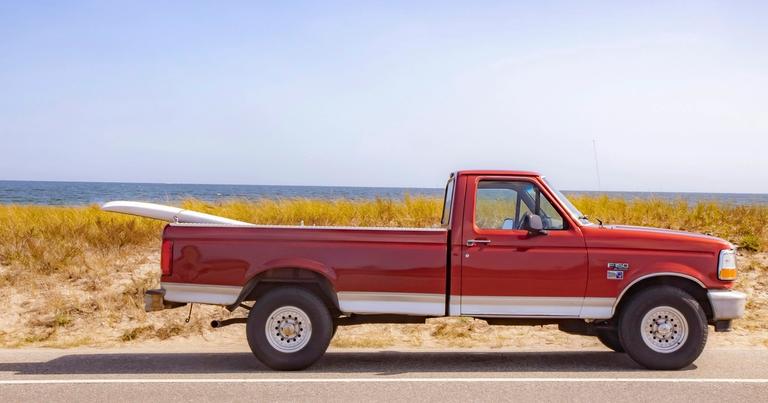
If you're thinking about buying a truck, an SUV or new equipment before year-end, the 2026 federal rules let most businesses deduct the entire cost in the first year. There are two ways to do it, Section 179 and bonus depreciation, and they work differently for vehicles. California follows neither one, which can matter more than owners expect.
Section 179 and bonus depreciation in 2026
- The Section 179 limit for 2026 is $2,560,000. It starts shrinking dollar for dollar once you place more than $4,090,000 of qualifying property in service during the year.
- Bonus depreciation is 100% for qualifying property acquired after January 19, 2025, and the 2025 federal tax law made that permanent.
Either way, the asset has to be placed in service in 2026, which means delivered, set up and ready to use by December 31. Used equipment and vehicles qualify too, as long as you haven't used them before and didn't buy them from a related party.
How Section 179 and bonus depreciation differ
Section 179 is an election you make asset by asset, which gives you control over how much to deduct. It can't create a loss, though. The deduction is limited to your business's taxable income for the year, and anything above that carries forward.
Bonus depreciation applies automatically unless you elect out for an entire class of property. It has no income limit, so it can create or increase a loss.
For S Corps, the difference shows up on the K-1. Bonus depreciation reduces the company's income before it reaches you. Section 179 passes through to each shareholder as a separate item, and the dollar and income limits apply both at the S Corp level and on each shareholder's own return. Either way, you need enough basis in the S Corp to use a loss.
Section 179 vehicle rules for 2026
What you can deduct for a vehicle depends mostly on its gross vehicle weight rating (GVWR). That's the maximum loaded weight printed on the sticker inside the driver's door, not what the vehicle weighs empty.
Cars and light SUVs: 6,000 pounds GVWR or less
These count as passenger automobiles, and depreciation is capped each year no matter what you paid. For vehicles placed in service in 2026, the first-year cap is $20,300 with bonus depreciation ($12,300 without), followed by $19,800 in year two, $11,900 in year three and $7,160 a year after that. The caps shrink further if you use the car partly for personal driving.
Heavy SUVs, pickups and vans: over 6,000 pounds GVWR
Heavier vehicles aren't subject to those caps, which is why they get so much attention at year-end. For an SUV rated between 6,000 and 14,000 pounds, Section 179 is limited to $32,000 for 2026. Bonus depreciation has no such limit, so with 100% bonus the rest of the cost can generally be deducted in the first year too.
The $32,000 SUV cap doesn't apply to vehicles that:
- Seat more than nine people behind the driver's seat
- Have a cargo area at least six feet long that isn't readily accessible from the passenger compartment, which covers many full-size pickups
- Have a fully enclosed driver's compartment and cargo area, no seating behind the driver, and no body section sticking out more than 30 inches ahead of the windshield, which covers most cargo vans
There's no official IRS list of qualifying vehicles. The Section 179 vehicle lists you'll find online come from dealers and websites, so check the GVWR and bed length on the specific vehicle you're buying.
The 50% business-use rule
To use Section 179 or bonus depreciation on a vehicle, you have to use it more than 50% for business, and the deduction is limited to the business-use percentage. Commuting doesn't count as business use. If business use drops to 50% or less in a later year, part of the deduction gets added back to income. A mileage log is what supports the percentage if the IRS asks.
Company-owned vehicle or reimbursed mileage?
S Corp owners have two ways to handle a vehicle. If the S Corp owns it, the company takes the depreciation and pays the costs, and any personal use by you is a taxable fringe benefit added to your W-2.
If you own the vehicle personally, the S Corp can reimburse your business miles under an accountable plan. The IRS standard mileage rate was 72.5 cents a mile for January through June 2026 and rose to 76 cents a mile for July through December. The reimbursement is tax-free to you and deductible for the company.
A heavy vehicle with high business use usually favors company ownership. A less expensive car driven a moderate number of business miles often comes out better with mileage reimbursement. It's worth running both before you sign.
California doesn't follow either rule
California doesn't allow bonus depreciation, and its Section 179 deduction is capped at $25,000, reduced once your purchases for the year pass $200,000. Anything above that is depreciated over the asset's normal life on your California return.
Say your S Corp buys a $90,000 full-size pickup in December 2026 and uses it entirely for business. Federally, the full $90,000 can be deducted for 2026. In California, the company can deduct $25,000 under Section 179, and the remaining $65,000 is depreciated over the next several years. That means more California income in 2026, both for the S Corp's 1.5% tax and on your personal California return, offset by larger California deductions in later years.
It also means keeping two depreciation schedules, one federal and one for California, for as long as you own the asset.
Before you buy in December
- Check the vehicle's GVWR and, for a pickup, the bed length.
- Make sure it will be delivered and in use by December 31. A vehicle paid for in December but delivered in January belongs to 2027.
- Decide between Section 179 and bonus depreciation with your tax preparer, considering your income, the California difference and whether you might sell the vehicle in a few years.
- Buy what the business needs. A deduction returns a fraction of the price, not all of it.
Frequently asked questions
What vehicles qualify for Section 179 in 2026?
Any vehicle used more than 50% for business qualifies, but the amount depends on weight. Cars and light SUVs rated 6,000 pounds or less are capped at $20,300 in the first year with bonus depreciation. Heavier SUVs are limited to $32,000 under Section 179, with bonus depreciation available for the rest. Qualifying pickups and cargo vans aren't subject to the SUV cap.
Is there an official Section 179 vehicle list?
No. The IRS doesn't publish one. Check the GVWR and, for pickups, the bed length of the specific vehicle.
Does a used vehicle qualify?
Yes, as long as you haven't used it before and didn't buy it from a related party.
Does California allow bonus depreciation?
No. California doesn't allow bonus depreciation and caps Section 179 at $25,000, so most large purchases are depreciated over several years on the California return.
Planning a purchase before year-end?
API Accounting, Tax & Advisory can help you decide how and when to buy, and which deduction to use, as part of our tax planning. Reach out before you sign, and see our year-end tax planning guide for the rest of the December checklist.
This article is general information based on federal and California tax rules as of November 2026. It isn't tax advice for your situation, so talk with a licensed professional before acting on it.